monarchmedia100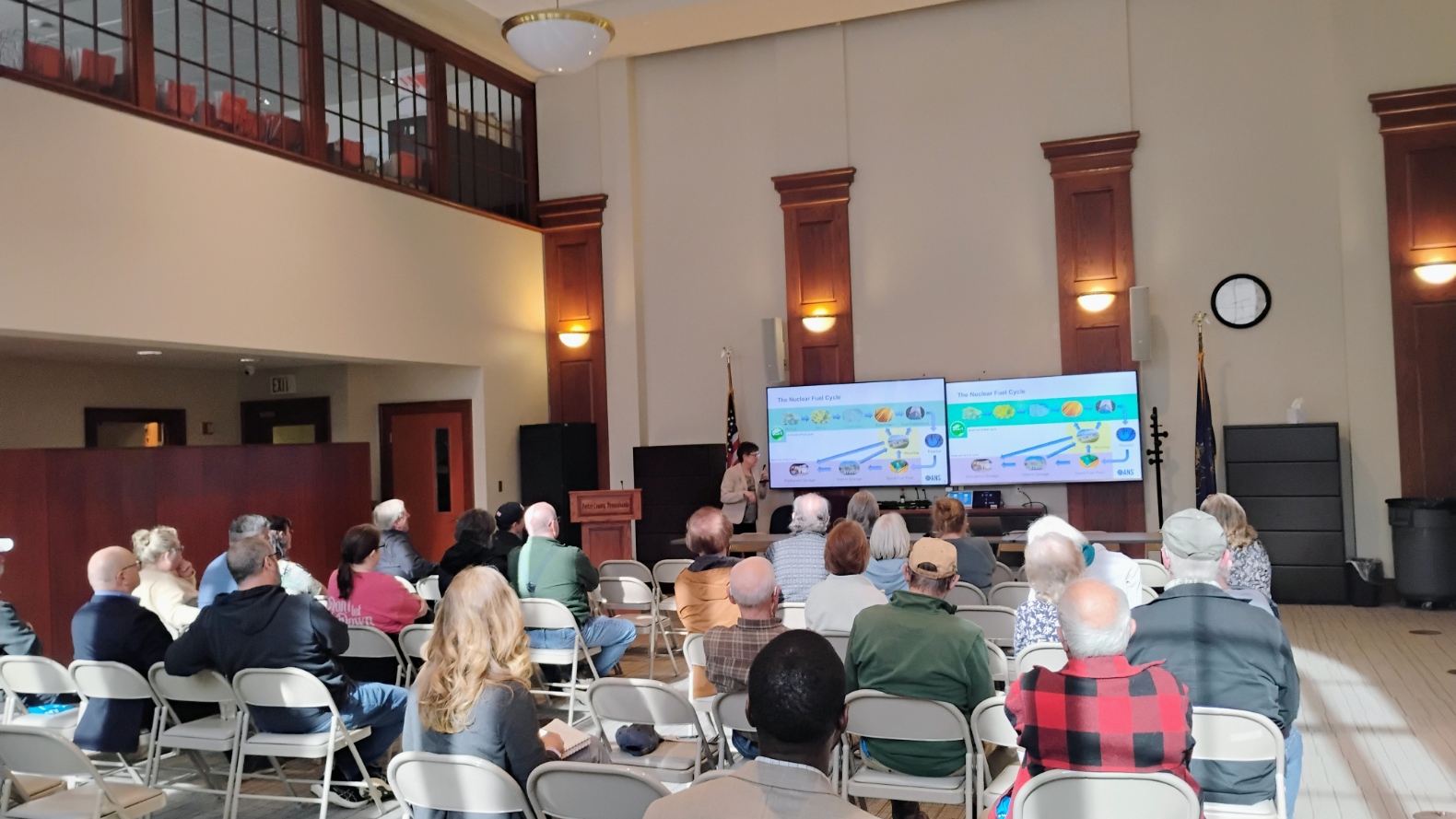
At a recent public “Town Hall Meeting” held in the Gunzburger Building Auditorium in Coudersport, residents gathered to hear a presentation on nuclear energy from a professor affiliated with Penn State University, as county officials and community members weighed the potential future of nuclear development in the region.
The meeting, attended by approximately 40 residents, included County Commissioners Nancy Grupp and Robert Rossman, both of whom appeared supportive of continuing conversations surrounding nuclear energy and its possible role in northern Pennsylvania’s future.

Throughout the evening, the speaker focused heavily on the mechanics and efficiency of nuclear power generation, presenting slides and educational materials explaining how uranium fuel powers reactors and how nuclear energy compares to fossil fuels, solar, and wind energy in terms of energy density and waste production.
At one point, the speaker said, “And don’t think I’m anti-fossil fuel. I love fossil fuels! They got us to where we are today!”
The professor repeatedly emphasized the efficiency of nuclear fuel, explaining that a single uranium fuel pellet could generate as much energy as large amounts of coal, oil, or natural gas. She described nuclear power as the “next logical step” in energy production and argued that modern reactor designs are becoming safer and more efficient.
However, while the presentation focused extensively on the benefits of nuclear energy and advancements in reactor technology, several audience members raised concerns about environmental impacts, water usage, wildlife disruption, energy costs, and long-term nuclear waste storage — topics some attendees felt were not fully addressed during the presentation.
One resident questioned what the actual implications would be for Potter County and surrounding communities should nuclear development eventually occur in the area.
“All this is nice and knowledgeable,” the attendee said, “but what are the implications for our county and the surrounding towns?”
The speaker responded by saying decisions about Potter County’s future would ultimately fall outside her jurisdiction and would involve regulatory oversight from the Federal Nuclear Regulatory Commission, as well as public input throughout the licensing process. She added that communities surrounding existing nuclear plants often benefit from improved infrastructure and high-paying jobs.

Not all attendees were convinced.
One resident pushed back on the economic argument, expressing concern that large-scale energy projects and data centers have already driven up electricity costs in other parts of the country.
“I don’t care what kind of kind neighbor that is,” the attendee said. “If we’re paying more, there is no benefit.”
Environmental concerns became a recurring theme throughout the question-and-answer session.
Several residents questioned how much water nuclear facilities would require and whether local waterways and fisheries could be harmed. One attendee pointed out that portions of Potter County have recently experienced drought conditions and asked how heavy industrial water usage could affect the region.
The professor acknowledged that nuclear plants do require significant amounts of water but stated that water usage and environmental impacts would be evaluated during the planning and licensing process.
Another attendee, who identified himself as a retired teacher from Florida, shared personal concerns based on his experiences living near the St. Lucie Nuclear Power Plant.
“The sea grasses are completely gone,” he said. “The sea trout are completely gone.” He went on to describe noticeable changes in local marine life and said he no longer eats fish caught near the facility.
Another resident expressed concern that warming waterways used for cooling reactors could negatively affect trout streams and wildlife habitats in Potter County, which is well known for its outdoor recreation and fishing opportunities.
Discussion also turned toward nuclear waste storage and recycling.
The professor explained that while countries such as France and Russia recycle portions of their nuclear fuel, the United States largely stores used fuel due to policy and economic decisions. She noted that spent fuel is currently stored at reactor sites across the country while the federal government continues to delay the creation of a permanent repository.
“The plans were supposed to have happened in 1998. It hasn’t happened yet,” she stated flatly.
At several points during the meeting, organizers and officials stressed that no nuclear plant is currently proposed for Potter County or neighboring counties.
“There are none,” one commissioner said when asked about potential sites. “This is just an educational session.”
Officials from the American Nuclear Society also emphasized that their role was educational rather than developmental, stating they were not representing industry or government interests.
Still, references to artificial intelligence data centers and growing regional energy demands fueled speculation among attendees about why these conversations are happening now.
One audience member referenced a recently announced partnership involving a large AI-focused data center planned somewhere within Pennsylvania’s Northern Tier and questioned whether nuclear energy could eventually support similar developments.
While no direct plans were discussed for Potter County, officials acknowledged that conversations about energy infrastructure, AI growth, and future electricity demand are becoming increasingly common across rural Pennsylvania.
Toward the close of the meeting, organizers reiterated that the event was intended to educate residents about nuclear technology and to encourage public discussion before any future proposals could emerge.