monarchmedia100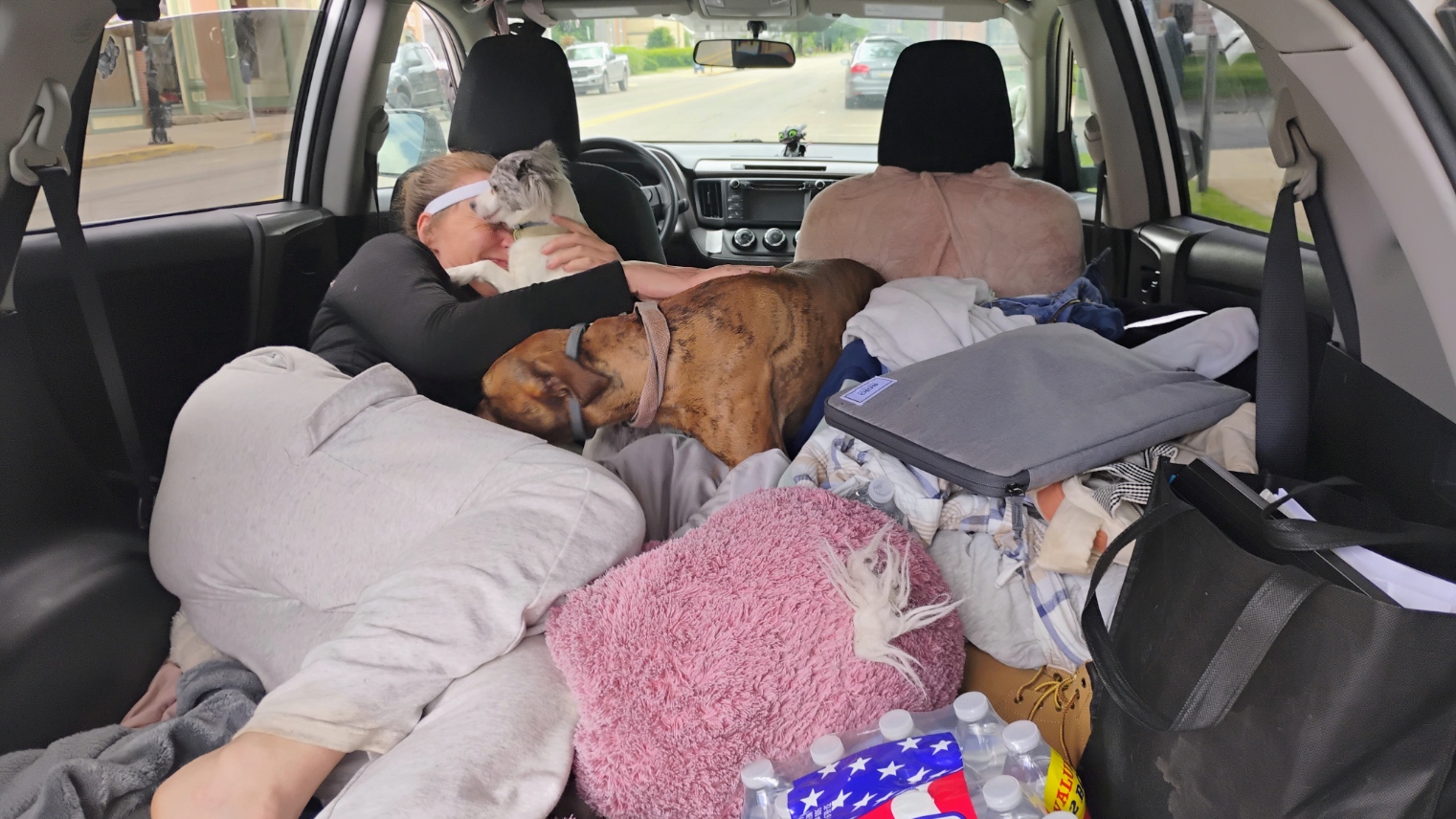
By Jessica Kenley
When most people picture homelessness, they imagine someone sleeping on a sidewalk in a large city.
They rarely picture a woman who gets up before dawn to work, pays taxes, has raised two daughters, carries years of childhood trauma, and quietly parks her vehicle in a parking lot each night because she has nowhere else to sleep.
Yet that is exactly where Renae finds herself.
At 37 years old, Renae works long days driving for DoorDash, often traveling to Ithaca, New York, because there are few comparable opportunities close to home in Potter County. When she grows too tired to continue driving, she folds down the seats inside her vehicle and sleeps there before beginning another day of work.
She never imagined this would become her life.
“I do live in my car,” Renae said during an interview with Monarch Media. “I’m trying to get a van so we have a house or a camper or bus or something.”

A Childhood Without Safety
Renae’s hardships began long before she became homeless.
Born in Olean, New York, she entered foster care when she was just three years old after, she says, enduring severe abuse in her biological home. She was later adopted by a family in Galeton.
Instead of finding stability, Renae says the abuse continued.
She described growing up in fear, recalling physical punishment, neglect, and emotional trauma that followed her throughout childhood. She says she left home as soon as she turned eighteen, determined to build a different life for herself.
She married, became the mother of two daughters, and worked steadily, including employment with Adelphia and later Time Warner Cable.
For a time, life felt stable.
Then it wasn’t.
Starting Over Again

Like many families in rural Pennsylvania, Renae’s life was shaped by forces beyond her control.
Employment opportunities disappeared.
Relationships ended.
Domestic violence entered her life.

Her mental health deteriorated under the weight of years of unresolved trauma.
In December 2023, overwhelmed and believing she had nowhere left to turn, Renae attempted to end her own life.
“I was tired of my life,” she said quietly.
She survived.
Today she chooses not to keep large quantities of prescription medications, explaining that she and her physician agreed medical marijuana was a safer treatment option given her history of depression and suicide attempts.

Health Challenges
As if homelessness were not enough, Renae is also living with a progressive neurological illness that she describes as affecting her energy, balance and mobility.
She says she tires easily, sometimes needing hours of rest after carrying groceries or climbing stairs.
Every morning, she worries about what her body will allow her to accomplish that day.
“I wake up every morning scared,” she said.
Despite those challenges, she continues working.
Working Without a Home
Driving for DoorDash is physically demanding under the best of circumstances.
For Renae, it means hundreds of miles each week, sleeping in parking lots between shifts, and trying to earn enough money to someday afford permanent housing.
She estimates putting tens of thousands of miles on her vehicle while chasing enough deliveries to survive.
Housing has become one of her greatest obstacles.
Without a permanent address, she says she struggles to obtain health insurance and other services many people take for granted.
“I don’t have an address,” she said. “I don’t have health insurance.”
More Than One Crisis

Renae also believes legal proceedings involving her partner have placed enormous financial strain on their household.
She described frequent travel for court appearances, jail visits, commissary expenses, and lost work, saying those costs dramatically reduced her income and contributed to her housing instability.
Monarch Media has obtained additional documents related to those proceedings and is continuing to review them. Because that review is ongoing, those issues will be examined separately in a future investigative series.

For Renae, however, the immediate reality is simpler.
She is trying to survive.
Looking Forward
Despite everything she has endured—childhood abuse, domestic violence, declining health, homelessness, financial hardship, and years of emotional trauma—Renae continues planning for a future she hopes will look very different.
She dreams of buying a used bus or camper she can convert into a home.
She hopes to earn enough money to stop sleeping in parking lots.
Mostly, she hopes for stability.
“I work,” she said.
It is a simple statement, but one that reflects a reality many rural Americans now face.
Homelessness does not always look like a cardboard sign on a street corner.
Sometimes it looks like a woman who works every day, pays for gas before groceries, folds down the back seat of her car at night, and wakes up the next morning determined to try again.
As housing costs continue to rise and affordable rentals become increasingly scarce across Potter County, stories like Renae’s raise difficult questions for communities and policymakers alike.
What happens when someone does everything they can to keep moving forward—and still has nowhere to call home?