monarchmedia100

By Jessica Kenley for Monarch Media
An account of a criminal case, years behind bars, and the difficult road toward rebuilding a life.
For one Potter County man, the road through the criminal justice system began when he was just 17 years old.
What followed, according to his account, would include repeated encounters with the justice system, an arrest stemming from an alleged drug transaction involving confidential informants, years of incarceration, and an ongoing struggle to rebuild his life after returning home.
His story also raises questions about the use of confidential informants and the consequences that can follow when individuals become entangled in undercover drug investigations.
A youthful mistake and a second encounter with the law
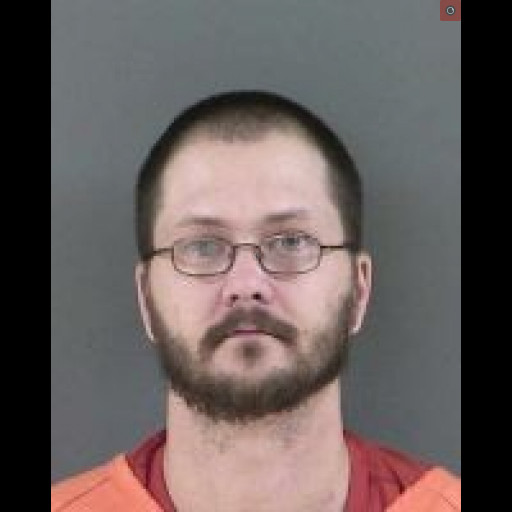
The man, identified as Eric Shaffer, recalled that his first involvement with the Potter County justice system came when he was 17, after he broke into a store.
He was placed on probation through a juvenile consent decree, an arrangement that can allow a young person to avoid a permanent record if the conditions are successfully completed.
He said he completed the probation successfully and was released from supervision.
But in 2013, he found himself facing another set of criminal charges.
This time, he said, the circumstances involved a proposed drug transaction and individuals he identified as confidential informants.
According to his recollection, he described the first person to set him up. He also alleged that another confidential informant subsequently became involved in an encounter at the Corner Cafe.
The man’s account was that he remained in a vehicle while another individual went inside and took money.
He said the group left without obtaining drugs.
Nevertheless, he recalled facing charges that included conspiracy to attempt to deliver drugs and criminal use of a communication facility, involving the use of a cellphone.
No drugs were ever bought.
The distinction between an attempted transaction, an agreement to commit an offense, and an actual delivery is important. The precise charges, evidence, and disposition in his case will need to be established through the original court records.
His allegations about the confidential informants also require independent verification.
Six years away from home
The man described serving approximately six years in prison, from 2015 until his release in 2021.
During that period, he was separated from his two daughters, who were still young when he went away.
The separation was something he said he spent considerable time trying to make up for after his release.
When he returned home, he threw himself into work.
He recalled holding two jobs, working a full day at a manufacturing facility in Wellsville before heading to another job in the evening.
Asked why he pushed himself so hard, his answer was simple: he was trying to make up for lost time.
He had missed years with his children, and working was one way he could begin rebuilding the life he had lost.
He also described a period of recovery from drug addiction, acknowledging that his return home did not mean every struggle had suddenly disappeared.
A health crisis complicates the road forward
Today, his circumstances are considerably different.
He told the interviewer that he has stage-four kidney disease, which he believes may be hereditary because of a family history of kidney problems.
He explained that the condition was discovered while he was in rehabilitation, when routine testing revealed significantly elevated kidney-function markers.
He now undergoes dialysis and is beginning the referral process for a potential kidney transplant in Pittsburgh.
He also described taking multiple medications for high blood pressure, which is caused by kidney disease.
These health challenges have complicated his ability to work and support himself.
The interview revealed another difficulty associated with his current sentence: electronic monitoring.
He explained that he had been placed on house arrest with an ankle monitor. However, an existing infection and the need to keep the affected area dry created a serious practical problem.
He said he could not submerge the monitoring device in water and was effectively expected to keep his foot out of the bath.
Concerned about the possibility of falling, he eventually filed a motion with the court.
Following a court appearance, he said the ankle monitor was removed and replaced with drug testing and verbal health checks.
His account illustrates how even the practical details of supervision can become complicated when a person’s medical needs and sentencing conditions collide.
More than a criminal record
There was another side to the man that emerged during the conversation: his love of cooking.
He previously worked as a chef, including at OIP, Kaytee’s and the West Pike Grill establishment he discussed during the interview.
He described learning to prepare a wide variety of seafood dishes, including swordfish, and spoke about the experience of working alongside someone who knew approximately 35 different seafood preparations.
He had hoped to return to restaurant work after spending time in warehouse employment. That opportunity ultimately fell apart when a family member who had planned to purchase the restaurant decided not to proceed.
For someone who had already spent years trying to reclaim lost time, another opportunity slipping away was understandably disappointing.
Still, he described having family members and friends who stop by and offer support.
He also spoke about his daughters, now teenagers, and the ordinary realities of trying to maintain a relationship with children who are growing up and developing lives of their own.
Those details matter.
A criminal case does not exist in isolation. Its consequences extend into families, employment, health, relationships, and the years people spend trying to find their footing again.
Questions that deserve answers
The allegations surrounding confidential informants in this man’s account deserve careful examination.
Who were the informants? What information did they provide? What were they threatened with if they did not cooperate? What was their involvement in the investigation? What evidence supported the charges? And what role did the prosecuting attorney play in the decisions that followed?
Those are questions that cannot be answered by an interview alone.
As the Pennsylvania Disciplinary Board prepares for proceedings involving Potter County District Attorney Andy Watson, scheduled for December 9, 10, and 11, the public deserves a clear understanding of the conduct under examination and the evidence presented.
This man’s experience is one account. It should not be treated as proof of misconduct by any individual without supporting documentation.
But it is a reminder that behind every criminal docket number is a human life, and that the decisions made within the justice system can have consequences that last long after a sentence has been served.
For this man, the work of rebuilding is still underway.