monarchmedia100
By Jessica Kenley | Monarch Media
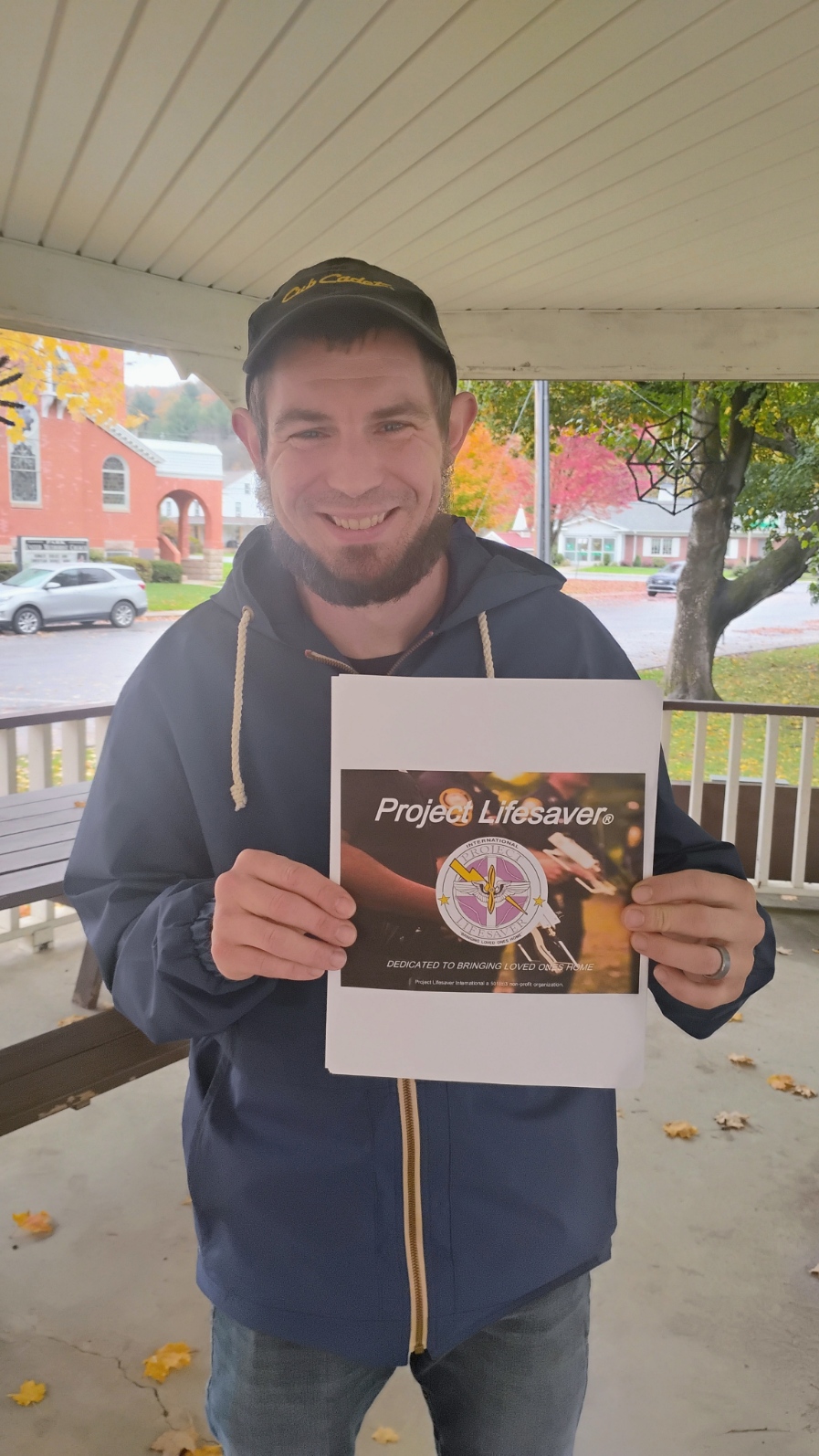
COUDERSPORT, Pa. — For Kyle Gee, the idea of bringing Project Lifesaver to Potter County is about more than technology, training, or a line in the county budget. It is about protecting vulnerable people, giving families peace of mind, and making sure that when someone wanders away, help can find them as quickly as possible.
Gee, whose 3-year-old son has been diagnosed with autism and is prone to elopement, or wandering away from caregivers, recently approached Potter County officials with a proposal to bring Project Lifesaver to the area.
The program uses specialized radio-frequency tracking technology to help trained public safety personnel locate people who wander because of autism, Alzheimer’s disease, dementia, Down syndrome, and other cognitive conditions.
For Gee, the need is personal.
His son received his autism diagnosis after a lengthy wait for an evaluation. Although the child is making progress with available support, Gee explained that his son’s tendency to run away presents a safety concern that many other families face, too.
During a recent family camping trip, Gee recalled, his son suddenly ran out of a recreation building and toward a nearby road.
“He just comes running out of the house like a gazelle on the road,” Gee said.
Although the road was at a campground rather than a busy public street, the experience underscored how quickly a situation could become dangerous.
“There’s still side-by-sides, and it’s still a slight risk, but it could be here,” he explained, emphasizing that the same behavior could happen in other settings.
Gee described his son as nonverbal, but also shared the remarkable abilities that make him proud as a father. His son reads and memorizes books, remembers material from slides, and wakes up reciting the alphabet, singing songs, and naming the days of the week.
“He’s a genius, really,” Gee said.
His son’s strengths and challenges coexist, and Gee recognizes that keeping him safe requires understanding the risks associated with wandering.
“I really watch my son so much,” he said. “I really don’t believe anything would ever happen, but I just know that I’m not the only one in the world that struggles with this.”
That realization prompted Gee to look for solutions that could benefit not only his own family, but other Potter County residents who care for children and adults at risk of wandering.
How Project Lifesaver Works

According to the presentation Gee shared, Project Lifesaver’s primary mission is to provide timely responses that save lives and reduce the risk of injury for adults and children who wander because of cognitive conditions.
The program equips participating clients with a small, watch-like transmitter worn around the clock. The transmitter emits a radio-frequency signal that trained responders can track using specialized equipment.
The process begins when a caregiver contacts a participating agency. Officers interview the caregiver and the individual who may be enrolled, helping establish the information needed to support a future search.
Once enrolled, the client wears the transmitter 24 hours a day. The program requires its battery to be changed every 60 days to help ensure the equipment remains operational.
If the individual wanders away, the caregiver alerts public safety personnel, who deploy the tracking equipment and begin searching.
The participating agency is responsible for maintaining the equipment, monitoring battery changes, managing client paperwork, publicizing the program, and documenting searches through after-action reports.
The goal is to help responders locate a missing person efficiently, reducing the time, personnel, and resources that may otherwise be required for a search.
Without specialized equipment and procedures, searches for vulnerable missing individuals can involve multiple agencies, hundreds of officers, extensive manpower, and substantial expenses.
Project Lifesaver is designed to make those searches more targeted and efficient.
A Reported Record of Successful Searches
One of the most compelling details in the presentation is the program’s reported history.
According to Project Lifesaver’s materials, the organization began placing transmitters in April 1999. Since then, it reports more than 4,000 searches nationwide, all of which were successful, with an average search time of approximately 30 minutes.
Those figures caught Gee’s attention.
“There’s been 4,000 searches. Every single one of them was successful,” he said.
Project Lifesaver’s presentation also reports that the program operates in all 50 states, nine Canadian provinces, and Puerto Rico, with more than 1,800 participating agencies.
The presentation lists endorsements from organizations including the National Sheriffs’ Association, the Alzheimer’s Foundation of America, the Virginia Sheriffs’ Association, the Florida Sheriffs’ Association, the National Council of Certified Dementia Practitioners, and Pilot International, among others.
For Gee, the program’s potential extends far beyond children with autism.
“This isn’t just for three-year-olds with stage two autism that are open issues,” he said. “This is for wanderers. This is for dementia.”
Older adults experiencing dementia, individuals with other cognitive conditions, and people with developmental disabilities may all face circumstances in which wandering creates a serious safety risk.
Gee believes families should know that a specialized search program exists and that communities should consider making it available.
What Would It Cost Potter County?
Bringing Project Lifesaver to Potter County would require an initial financial investment, followed by ongoing expenses to maintain the program.
Gee estimated that startup costs would total approximately $7,000, including equipment, training and related expenses. He recalled that the initial program cost was approximately $5,800, with additional travel expenses estimated at around $800 for trainers.
He also estimated that ongoing costs could range from approximately $1,000 to $2,000 annually, depending on the program’s requirements.
These figures are preliminary estimates shared by Gee during the interview and would need to be confirmed with Project Lifesaver before the county could determine its actual financial commitment.
According to the presentation, an interested agency begins by contacting Project Lifesaver and submitting a letter of intent and operational agreement. Equipment is then ordered, and instructors provide training for participating personnel.
The basic operator course takes two days, with an instructor-training component included during the second day. Participants receive certification as Basic Operator Electronic Search Specialists and instructors after completing the required training. Recertification is required every two years.
The program would also require a local agency to oversee operations, maintain equipment, and ensure that participating clients’ transmitters receive their required battery changes.
Gee recognizes that the initial investment would be followed by ongoing expenses. Nevertheless, he believes the potential to save even one life would justify the cost.
“Even if it’s just one that you save in every five years, I think it’s worth the $10,000,” he said.
Taking the Proposal to County Officials
Gee has already taken steps to bring the proposal to the attention of Potter County government.
He initially contacted former county Jail Board Chairman Paul Heimel, whom he knew through Heimel’s son, before following up through the county’s official channels.
According to Gee, the information was subsequently forwarded to other county officials, including Glenn Dunn. Gee said he provided the presentation and additional information about the program after being contacted.
He later spoke with Heimel, who, Gee said, indicated that he intended to look into the proposal and determine whether the program could fit within the county budget.
Gee offered to volunteer his time to help move the initiative forward.
“I don’t expect something,” he said, explaining that he wants to help however he can.
At the time of the interview, the proposal was still under consideration, and no final decision about bringing Project Lifesaver to Potter County had been confirmed.
The next steps would involve verifying startup and operating costs, determining which agency would administer the program, identifying funding and evaluating the resources needed to make it available to local families.
More Than Equipment
For Gee, the proposal is about more than a tracking device. It is about recognizing a challenge faced by families across the community and asking whether something can be done to make their lives safer.
He also pointed to alternatives such as AngelSense, a tracking and alert service for individuals who may wander. However, he explained that such services can involve device costs and recurring monthly fees, depending on the arrangement.
Project Lifesaver offers a different approach through trained public safety agencies and a coordinated response system.
Gee hopes Potter County will explore whether that approach could become another resource for residents who need it.
“People present it to people that are in positions like me,” he said, expressing frustration that more people do not know about the program.
“Everybody should know about it. Everybody.”
His message is straightforward: wandering can happen quickly, and families should not have to face the danger without knowing what resources may be available.
Whether Project Lifesaver ultimately comes to Potter County will depend on further evaluation by county officials, including costs, staffing, equipment, and the agency responsible for operating the program.
But Gee has already taken the first step by bringing the idea forward.
For one father, a proposal that began with concern for his young son has become an effort to make the community safer for other families, too.
And in a county where families may someday find themselves desperately searching for a loved one who has wandered away, the possibility of having another tool to bring that person home safely is a conversation worth having.
Monarch Media will continue to follow developments as Potter County considers the proposal.