monarchmedia100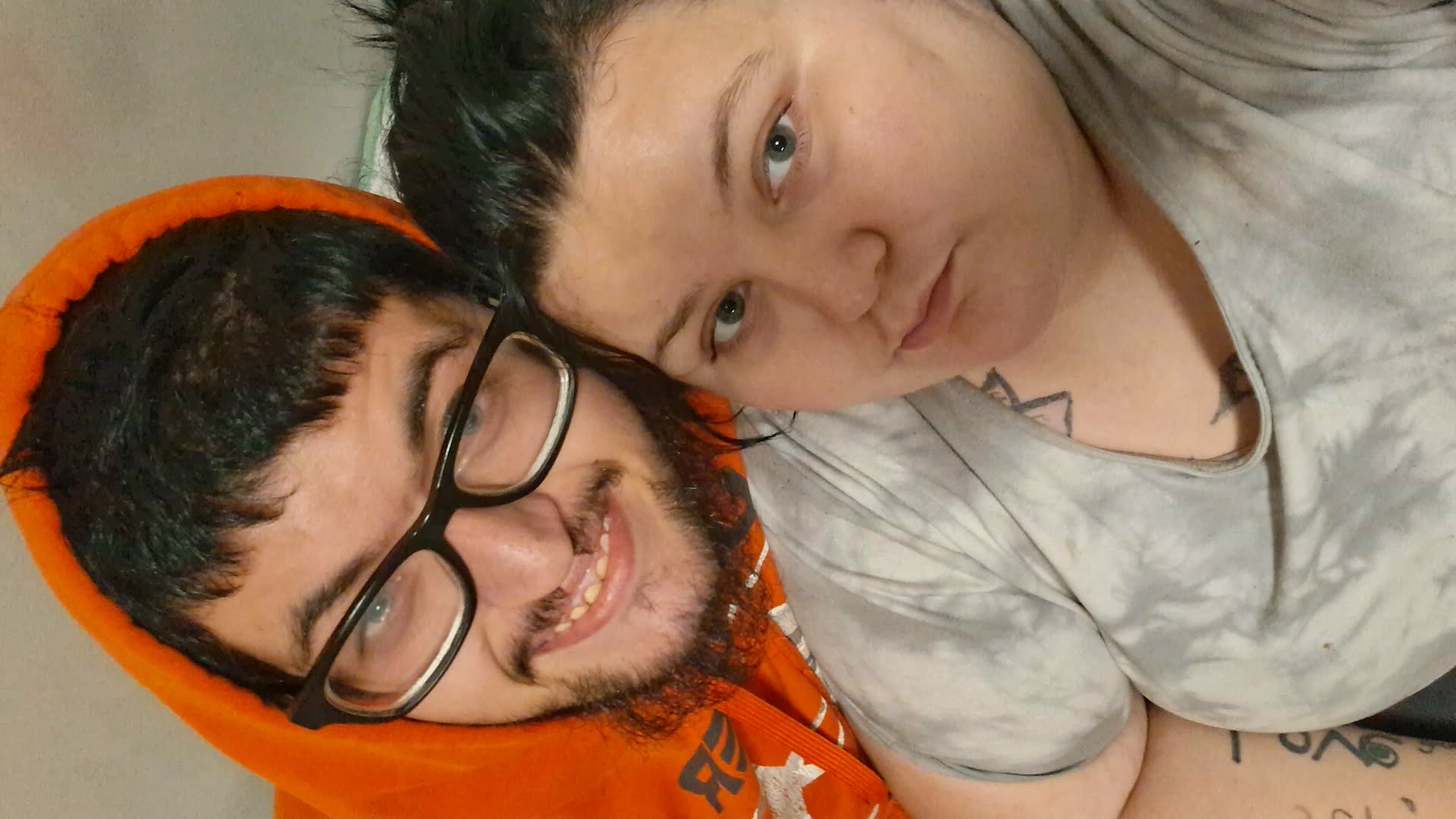
By Jessica Kenley | Monarch Media
At just 23 years old, Autumn Hemphill says she has already lived through more trauma than many people encounter in a lifetime.
She has known childhood instability, foster care, homelessness, addiction, abusive relationships and the loss of people she loved. She says she began using heroin intravenously at approximately 14 years old and remained caught in addiction for years.
But when Hemphill agreed to tell her story, she made one thing clear:
She does not want pity.

“I don’t want no pity from anybody,” Hemphill said. “I’m doing this for justice, for my sister.”
Her story is complicated, painful and, ultimately, one of survival.
A childhood without safety
Hemphill’s earliest memories are of a home where she says drugs, neglect, and violence were part of everyday life.
She was one of three young children living with her mother, Arlene Haines, and Clinton Watson, whom the children regarded as their stepfather. Hemphill said her mother struggled with drug addiction, and that there were times when there was barely enough food in the house.
She remembers being extremely young but says the memories remain vivid.
“I was young, but I still remember it like it was yesterday,” she said.
Hemphill also described an incident involving her two-year-old sister being murdered that she says ultimately resulted in the children being removed from the home. According to Hemphill account, her sister was taken into a bathroom by Watson after failing to use the toilet and later emerged dead.
Hemphill said the children were subsequently placed with relatives and that she eventually entered the child-welfare system.
What followed was years of foster care.

“I was raised in foster care,” she said.
Some of those placements, she recalled, were frightening rather than safe. She described one foster home where she says children were chased with deer heads and another where she remembers being locked in a barn.
By the time she was eight, Hemphill said she had already spent years moving through the system and had been placed on numerous medications. She described herself as an angry child who had learned not to trust adults.
“I wasn’t an easy kid,” she acknowledged. “I didn’t want parents at that point.”
But Hemphill says the behavior adults saw in her was inseparable from what she had experienced before she ever entered their care.
Learning to survive
Eventually, Hemphill was adopted by Timothy and Kimberly Hemphill.
She describes that period of her life in complicated terms. She acknowledges that she acted out and says she carried tremendous anger, but she also alleges that she was physically disciplined and emotionally mistreated.
At one point, she said, she went to school with marks from being struck with a switch. School personnel contacted child protective services, she recalled, but the intervention did not result in the changes she hoped for.
Then another child entered the family.
Hemphill said the arrival and adoption of a younger boy made her feel as though she had been replaced.
“I asked my dad why I wasn’t good enough,” she recalled.

That feeling of not being wanted followed her into adolescence.
At approximately 14, Hemphill said, she began using heroin intravenously.
Her parents did not realize the extent of her drug use, she said, and she began experiencing withdrawal whenever she was placed in residential treatment.
“I was angry,” she said.
She also spent time in psychiatric and residential treatment facilities, where she says she learned some of the basic skills other children normally learn from their families.
She remembers learning how to cook and clean from treatment staff.
“I wasn’t in the kitchen,” she said of her childhood home.
From addiction to homelessness

Hemphill’s teenage years eventually gave way to homelessness and increasingly dangerous relationships.
She said she graduated from high school while living in a homeless shelter in Ulysses.
At 17, she entered a relationship with an older man, Billy Frawley, whom she said was 54 at the time. She described living with him in a small camper in Mansfield and said the relationship became abusive.
Hemphill alleges that she was physically and sexually abused during that period. She said she did not report the sexual assaults to police at the time because she had reached a point where she no longer believed her own life had value.
“I really didn’t care whether I died or lived,” she said.
She also disclosed that she had experienced sexual exploitation as a very young child. Those allegations are among the most serious portions of her story, and Hemphill says they contributed to the way she viewed herself and relationships later in life.
Yet even while recounting those experiences, she repeatedly took responsibility for her own later behavior.
“I’ve done bad stuff,” she said. “I’m not innocent.”
For Hemphill, acknowledging her own mistakes is not the same thing as excusing what happened to her.
She said years of trauma left her unable to trust people and often caused her to push others away before they could hurt her.
“It’s easier for me to hurt them than them hurt me,” she explained.
Eight years caught in addiction
Hemphill said her addiction lasted from approximately age 14 until she was 22.
During those years, she moved through relationships, treatment, homelessness and eventually employment in a strip club as she struggled to support her addiction.
When she finally became clean, she said, she discovered another problem:
She did not know what to do with her life without drugs.
“I didn’t know what to do,” she said.
She had lost many of the friends she had known while using because, as she described it, they were living the same life she was trying to leave behind.
Her turning point came through a man she now calls her Godfather, Lawrence Button.
Hemphill said Button and his former wife found her on the side of the road while she was struggling with addiction. She credits them with helping her through withdrawal and providing food and care afterward.
“If it wasn’t for them…” she said, trailing off.
The significance was clear.
Someone had stayed.
The people who stayed
Today, Hemphill says her life looks dramatically different.
She has a fiancé, a baby on the way and people she considers family—even when they are not related to her by blood.
She specifically credits her fiancé, her chosen uncle Andrew Welk, Lee, and members of her fiancé’s family with helping her establish the support system she had spent most of her life without.
She also wanted to publicly recognize numerous people who, she said, offered her a place to stay, brought her food, gave her gifts, checked on her or simply remained present when she was at her lowest.

Among those she named were Katrina Kern, Nathon Marble, Lawrence Button, Caiden Kern, Benjamin Polz, Tammy Fry, Carly E. Johnston, Charles Johnston, Harold Outman, Christina Himes, Kenzie Hoppock, Joshua Duell, Sharon Duell, and many others.
Some, she said, helped only for a short time.
To Hemphill, that did not make their help insignificant.
“They gave me a place to stay for a short amount of time as they could,” she said. “We will be forever grateful for those people.”
She also remembered people who brought food and small gifts when she had almost nothing.
Those gestures mattered.
“I was living at Katrina’s,” Hemphill recalled. “You’d bring down food, little gifts,” talking about when our paths crossed for the first time.
A different future
Hemphill now says she is living with her uncle Andrew Welk while her fiancé is nearby. She is expecting a baby and says she is doing well.
For someone who spent much of her childhood being told, directly or indirectly, that she was a problem, the future represents something she once could not imagine.
She admits there are still difficult days.
“There are nights where the nightmares get bad,” she said. “There are days where I don’t want to get out of bed, but I still do.”
And she has found one way to carry what happened to her.
“I carry it by helping other people,” she said.

That may be the most important part of Hemphill’s story.
Not that she survived every terrible thing that happened to her.
Not that she made every decision correctly.
Not even that she has completely escaped the consequences of her past.
But that at 23, she is still here.
She is building a family.
She is trying to stay clean.
She is learning how to trust.
And she is choosing to use the life she has left to help other people who may still be trapped in the places she once knew.
Hemphill knows that telling her story publicly may change the way some people see her. She expects some people from her past to disagree with her account.
She is willing to accept that.
“I know I’m going to get retaliation,” she said. “I’m willing to face them being mad at me. I’m okay with that.”
She said she wants the people who helped her recognized, but she also wants the people who harmed her to be held accountable.
Most of all, she wants her story understood in its entirety—not simply reduced to the years when she was addicted, homeless or struggling.
Because there was a child before the addiction.
There was a teenager before the homelessness.
And there is a young woman now who says she is determined not to let the worst things that happened to her become the definition of who she is.
“I’ve been able to close that chapter,” Hemphill said.
The chapter is not forgotten.
But for the first time, she says, she is the one writing what comes next.