monarchmedia100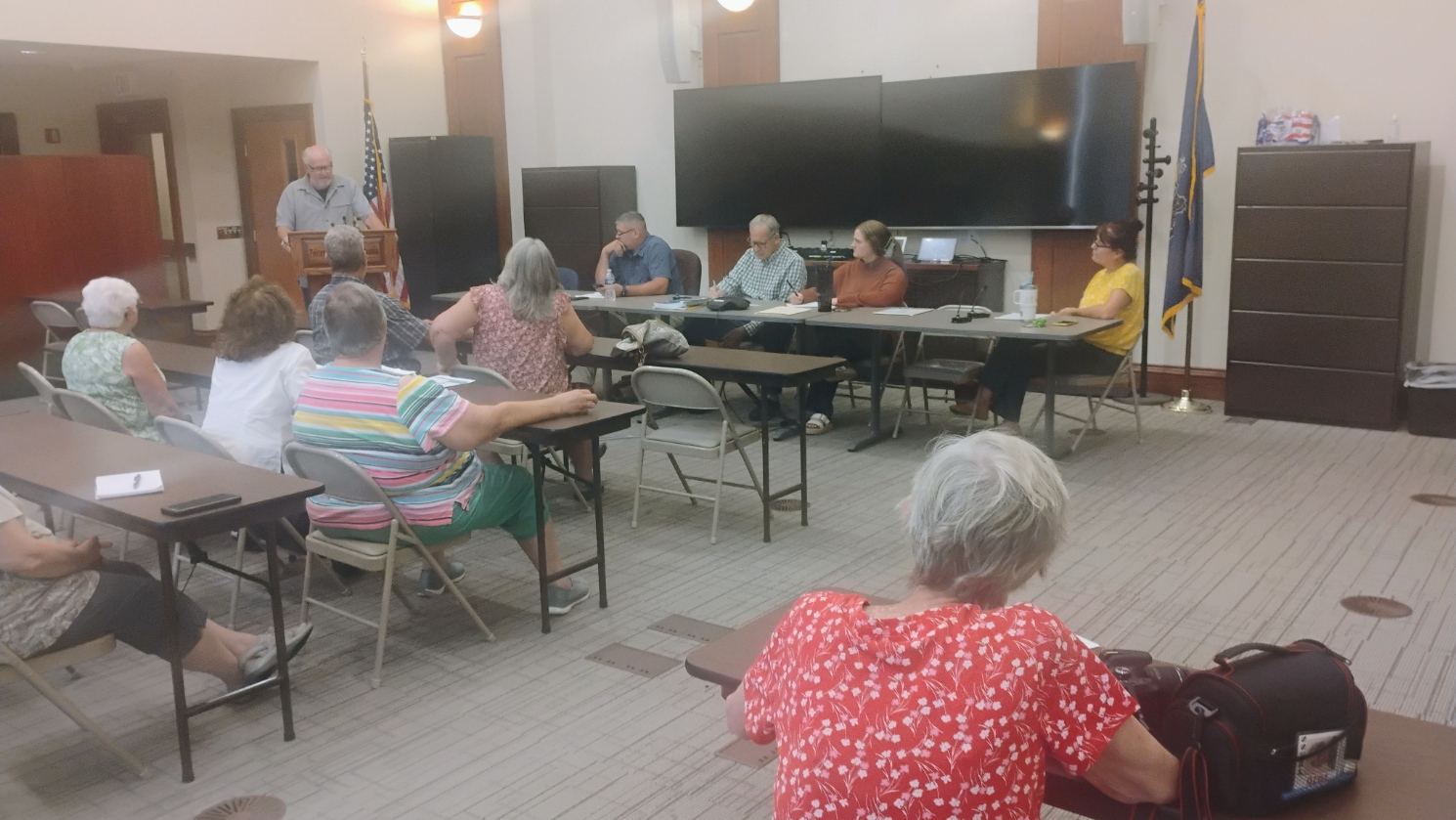
By Jessica Kenley
POTTER COUNTY, PA — Concerns about potential artificial intelligence data centers, local zoning protections, water usage, environmental impacts, and the loss of tax-producing land dominated much of the public discussion during a recent Potter County Commissioners meeting this past Thursday.
The discussion comes as county officials and residents continue to monitor the possibility of large-scale data center development in northern Pennsylvania and work toward updating local regulations.
A member of the public asked commissioners about the county’s progress toward establishing stronger protections that would require incoming developers to pay the full upfront cost of independent environmental and other impact studies.
The response was that the county is waiting on the Planning Commission’s recommendations before moving forward with changes to the county’s regulations.
“Everything’s transparent and open to the public,” a county representative said of the Planning Commission’s work, adding that public input is welcome.

The discussion also touched on the possibility of using a temporary ordinance if the county’s more comprehensive zoning work is not completed within the anticipated timeframe.
One speaker warned that delays could become significant if the county’s work extends beyond November.
“I think that if we send any delay past November…maybe we should consider looking at the Tioga County ordinance and the fast track,” the speaker said, explaining that a temporary measure could potentially be replaced once a more comprehensive ordinance is ready.
State changes could affect local data center development
During the meeting, participants also discussed a recently issued executive order concerning data center development in Pennsylvania.

The order was described as removing AI data center proposals from a fast-track permitting process and requiring additional consideration of issues including environmental protection, workforce and economic development, transparency, and community engagement.
The discussion referenced new state requirements concerning electricity and water usage, and the need for local approval before projects move forward through the state process.
One participant emphasized the importance of understanding the changes at the state level while Potter County works on its own regulations.
The state’s approach, according to the discussion, stops short of a blanket moratorium but could make it substantially more difficult for many proposed data center projects to meet the requirements.
For Potter County, the issue is particularly significant because of the area’s electrical infrastructure and water resources.
One speaker noted that developers are attracted to the region in part because of the availability of dedicated electrical power, which could eliminate one of the major obstacles faced by data centers attempting to connect to the broader electrical grid.
“The reason they like this area is — that’s one of the biggest issues in the state—is tapping into the grid, and affecting everybody’s electricity rate,” the speaker said.
The speaker added that a dedicated power source could remove that hurdle for a potential development in the region.
Residents urge strong local protections
Several residents addressed the commissioners about the need for strong zoning regulations before any major data center proposal reaches the county.
One resident said she had researched the possibility of a temporary moratorium or short-term prohibition on accepting data center applications while comprehensive zoning amendments are drafted and legally codified.
She also urged officials to specifically address water consumption, noise, distance requirements, heat, and other environmental concerns.
“We’re the headwaters of three major rivers, and if we don’t protect our water, it doesn’t just affect us; it affects everyone,” she said.
She argued that local zoning should specifically address the environmental issues protected by Pennsylvania’s Constitution.
“Zoning must be strong to prevent AI data centers, specifically addressing water usage, noise, distance, heat—all of the environmental issues in our Pennsylvania Constitution that protect us must specifically be on the zoning books to keep us protected here locally,” she said.
The resident also warned that some developers have found creative ways around local restrictions in other communities, emphasizing the importance of carefully written ordinances.
She referenced the Pennsylvania Commonwealth’s Data Center Toolkit, released in May 2026, as another resource that local officials working on zoning should examine.
A county representative indicated that the toolkit was already available in the county office.
Questions about possible land purchases
The meeting also included questions about reports that an energy company may have purchased thousands of acres along Dwight Creek Road.
The person raising the question said she had examined property records and found three parcels of approximately 1,000 acres each, asking whether commissioners had any knowledge of what was being planned for the property.
Commissioners said they had not received information confirming such a project.
The conversation underscored the difficulty of separating confirmed development plans from rumors and speculation, particularly as interest in energy infrastructure and data centers continues to grow.
One commissioner noted that increased interest in oil and gas does not necessarily mean a data center will follow.
The discussion also returned to water usage. Participants acknowledged that water consumption can vary substantially depending upon the design and operation of individual facilities.
One example discussed involved a data center that reportedly used reclaimed water associated with a nuclear power facility. According to notes shared during the meeting, that particular facility used water primarily during summer months and used approximately 1.3 million gallons annually.
The discussion highlighted the importance of examining individual projects rather than assuming every data center will have identical water requirements.
Commissioners discuss oil, ga,s and lost tax revenue
The conversation eventually expanded beyond data centers to the economic impact of oil and gas development and state-owned land.
A question was raised about whether Potter County receives financial benefits from oil and gas activity.
The discussion then turned to the impact of land being removed from the local tax base.
One speaker described a recent land exchange involving an energy company and state land, noting that portions of the property involved were located in Potter County and could consequently be removed from the county’s taxable property base.
The loss of taxable land, the speaker argued, can be particularly significant for communities already struggling to maintain roads and adequately fund public services.
The discussion also referenced proposed legislation that would direct a portion of revenue generated from state-owned lands back to the counties, municipalities, and school districts where those lands are located.
One speaker described the proposal as potentially significant for communities such as Potter County.
Another commissioner agreed that legislators should address the issue.
“We are the ones that live on the land where the oil and gas exist, and once it leaves the ground, there are a lot of people that benefit from it, and where it originates should also benefit,” Paul Heimel said.
Another speaker described the situation more bluntly as a “transfer of our wealth.”
The concern, officials said, is that communities producing natural resources can continue to struggle with aging roads and other infrastructure while much of the economic benefit leaves the region.
One commissioner pointed to the condition of local roads as an example.
“It would allow us to have some decent roads,” Heimel said. “You know, if we drove on great roads in this area…and our schools were well funded…”
The speaker continued by noting that the townships are doing what they can with limited resources, but argued that the resources available to them are not sufficient.
“The townships are working with what they have. The point is, they don’t have what they need,” Heimel said.
Public meetings and continued community involvement
The commissioners also discussed upcoming public meetings and how information about county activities is being communicated to residents.
A question was raised about whether an October town hall meeting could be used as part of the public review process for proposed ordinance changes.
County officials explained that the Planning Commission would establish the necessary dates and that public notice requirements would have to be met before an ordinance could be considered for approval.
The commissioners also discussed using existing community notification systems and social media to increase public awareness of meetings.
An upcoming town hall concerning the Office of Aging was also discussed. Officials clarified that it was being referred to as a town hall rather than a formal public hearing and said that Human Services would be responsible for advertising the event once details were released.
The meeting demonstrated the growing public interest in how Potter County will respond to potential large-scale development while protecting its natural resources and maintaining the county’s economic base.
For residents and county officials alike, the questions surrounding AI data centers remain unsettled—but the discussion made clear that the county is being asked to prepare before a major proposal arrives.
Jessica Kenley is a reporter and Managing Editor of Monarch Media, a nonprofit online newsroom covering Potter County and the Pennsylvania Wilds.