monarchmedia100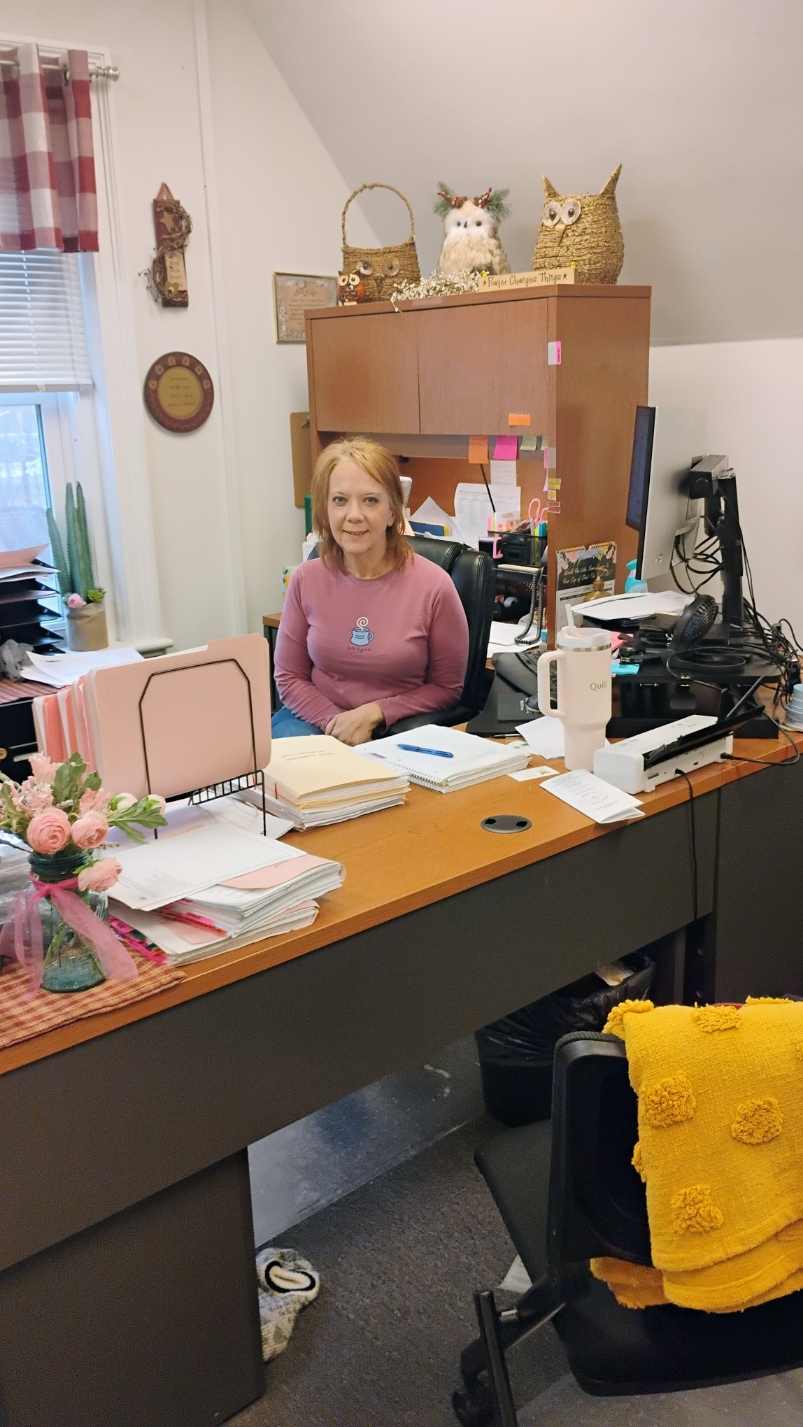
By Jessica Kenley
COUDERSPORT, Pa. — From the outside, homelessness in rural Pennsylvania can be easy to miss. But for one frontline worker serving four counties, it is impossible to ignore.
“I have calls every single day,” said Kim Andrus, a caseworker and community-based organizer with the Northern Tier Community Action Corporation (NTCAC). “People facing eviction, people who are already homeless—couch surfing, living in tents, living in cars.”
Andrus has worked in the field for six years, managing a web of programs that span Potter, McKean, Cameron, and Elk counties.
She was the Director for the Emergency Rental Assistance Program (ERAP), which has since closed. She is now the manager for HOME (Home Investment Partnership Program), and she is the Community Based Organizer (CBO) for all of Potter County and Elk County.
But it doesn’t stop there–Andrus also does the Emergency Solutions Grant, which is contracted through Lawrence County Community Action, and serves all four counties. Additionally, MFP, which stands for My First Place, is another program, and is for youth aged 18-24 who find themselves homeless and in need of services.
But wait–there’s also the SOR (Opioid Addiction Services) program and the PHARE program (Pennsylvania Housing Affordability and Rehabilitation), which are going to be taken over by Ashley Mason, a new trainee.
This might relieve a little bit of the pressure on Andrus.
To wrap it all up, she mentioned that the NTCAC also has a Head Start, a Disaster Management Program, the Ramps of Hope, a Weatherization Food Pantry, and rental properties.
Andrus’ work seemingly never ends, and ranges from rental assistance and housing rehabilitation for seniors to youth homelessness prevention and opioid recovery support.
But it is her day-to-day encounters with homelessness that have left the deepest mark.
“Last week I had to pull over after my homeless people in a tent and just sobbed…” said Andrus, getting teary. She went on, “But that’s what lit this fire,” she declared, shaking her head.
Andrus went on to say, “It’s chaos,” she said. “The need is so immediate—and it’s getting worse–we need funding. Nobody has funding. We get funding and we go through it immediately because the need is so great. We have a crisis on our hands.”
Andrus went on to explain that the past couple of years have been the worst she’s seen yet as far as the need goes, and it seems to be intensifying.

A Crisis Hidden in Plain Sight
Despite growing demand, Andrus says many residents remain unaware of the scale of the issue, but that, “Over 50% of Americans are two paychecks away from being homeless. That’s huge.”
For example, she went on to tell a story about how she, herself, was very sick just last year–so sick she had to be hospitalized for weeks.
Andrus said that if she hadn’t had short-term disability, she would have been homeless too.
“I’ve had people tell me, ‘I didn’t know we had homelessness here,’” she said.
Her response?
“No—either you chose not to acknowledge it, or you don’t see it.”
In rural communities, homelessness often doesn’t look like it does in cities.
“You don’t see people lined up on the streets,” she said. “They’re couch surfing. They’re in tents. They’re staying wherever they can.”
And when those situations collapse, there are few places to turn.
“Show me a shelter where I can send them,” she said. “We don’t have one.”
Limited Resources, Endless Need
When contacted, the Northern Tier Children’s Home director, Fern Burdick, was asked about their homeless prevention program, she said that people are only able to stay there for three days, and after that, “I don’t know.”
When the Potter County Human Services Administrator, Thomas Patterson, was contacted, he said that since the protection provided by ERAP from COVID ended in July, a lot of people have been kicked off of a lot of services–like rental and housing assistance.
Patterson went on to say that there is a “major problem” with housing in Potter County, where there are plenty of beautiful Air Bnb’s for the more fortunate tourists and visitors looking to vacation, actual rental housing for people who live here is extremely limited.
Another barrier Patterson mentioned, seemingly distressed with the situation, was pets, who are often “members of the family.” He pointed out that most landlords and almost all hotels do not allow pets, so if people are not willing to leave their beloved behind, they may find themselves camping at the Austin Dam, which, for one family, is happening right now.
Back in Andrus’ office, she was explaining that, “If we paid for hotels for everyone, there goes our funding.”
That funding, she adds, never stretches far enough.
Another barrier is that people don’t want a homeless shelter near them, even though the homeless are “already here,” she said.
“These people suffer from…” Andrus said, ticking off her fingers, …mental illness, abuse, domestic violence, some people are coming out of prisons or jails…”
What Andrus is explaining is how generational poverty happens in America.
Barriers Beyond Housing
For many clients, the challenge goes far beyond finding a place to live.
“Some people don’t know how to read or write,” Andrus said. “They don’t know how to fill out an application for housing, or food stamps, or even get an ID.”
“They weren’t taught how to keep a job, how to budget, how to apply for work,” she said. “There are so many barriers.”
Even basic necessities can be out of reach.
“Our funding doesn’t pay for things like photo IDs or birth certificates,” she said. “But you need those for everything.”
Work That Doesn’t End at 5 p.m.

For Andros, the job rarely stops when the workday ends.
“I take this home with me every single day,” she said. “What are we doing as a society to help these people?” Andrus went on to say that Potter is, in fact, the worst of her four counties, when it comes to homelessness prevention and services.
She described delivering supplies, like toilet paper and food, coordinating donations through social media, and even using her own money to help clients.
“I’ve emptied my own closets and taken truckloads to people,” she said.
Recently, she spent weeks assisting a group living in a tent—two adults, two dogs, and a cat.
“I took them Easter dinner,” she said. “I started their fire.”
Moments like that, she admits, take an emotional toll.
Tough Love—and Real Results
Despite the challenges, Andrus says her approach is rooted in accountability as much as compassion.
“I’m very blunt with my clients,” she said. “You’re not going to like what I have to say. I’m gonna hurt your feelings. You have to work for it.”
Her method focuses on long-term stability, not just short-term relief. “Our mission is to help you become self-sufficient,” she said. “Not to do everything for you.”
She points to one success story as proof the system can work.
“In eight months, we paid off thousands in fines, got her a job, a vehicle, and she’s saving to buy her first house,” Andrus said. “She’s been clean and is doing amazing.”
Calling for Change
For Andrus, the solution begins with acknowledging the problem. Next, she envisions a centralized space to store donated furniture and essentials for newly housed individuals–something similar to the Habitat for Humanity store that was recently shuttered in Coudersport.
“When I get someone housed, then what?” she said. “They have nothing. No bed, no dishes—nothing.”
Her goal is simple but ambitious: to help people move not just into housing, but into stability. “It’s easy to call a house a home,” she said. “But without anything in it, you’re just camping in a structure.”
A Human Problem
At its core, Andrus believes the issue is not just about funding or policy—but people. While she acknowledges that some individuals struggle with accountability, she insists that compassion must come first.
“I don’t care what they’ve done in their past,” she said. “They deserve dignity.”
For Andrus, the work is as much a calling as it is a career.
“I pray over them every day,” she said quietly.
She knows she cannot fix everything—not the funding gaps, not the systemic barriers, not the long road many of her clients still have ahead.
But every day, she shows up anyway—answering the calls, driving the miles, carrying what she can.
And maybe that’s the hardest truth to sit with: homelessness here doesn’t look the way people expect it to. It isn’t always visible. It doesn’t always announce itself. It sleeps in tents tucked into the woods, in cars parked just out of sight, on couches that aren’t permanent.
It lives quietly among us.
Because behind every phone call, every late-night Facebook post, every trunk full of donated supplies, there is a simple, urgent belief driving the work forward: that dignity is not something you earn once you’ve made it back on your feet—it’s something you deserve, even when you’ve lost everything.
Donations are always welcome. You can contact Kim to discuss your donation of any size. These donations will be used for items that the programs cannot purchase.
If you or someone you love is experiencing homelessness in Potter, Elk, McKean, or Cameron Counties, you can call 814-486-1161, or go to 135 W. 4th St., Emporium, PA 15834 and ask for Kim to find resources near you.