monarchmedia100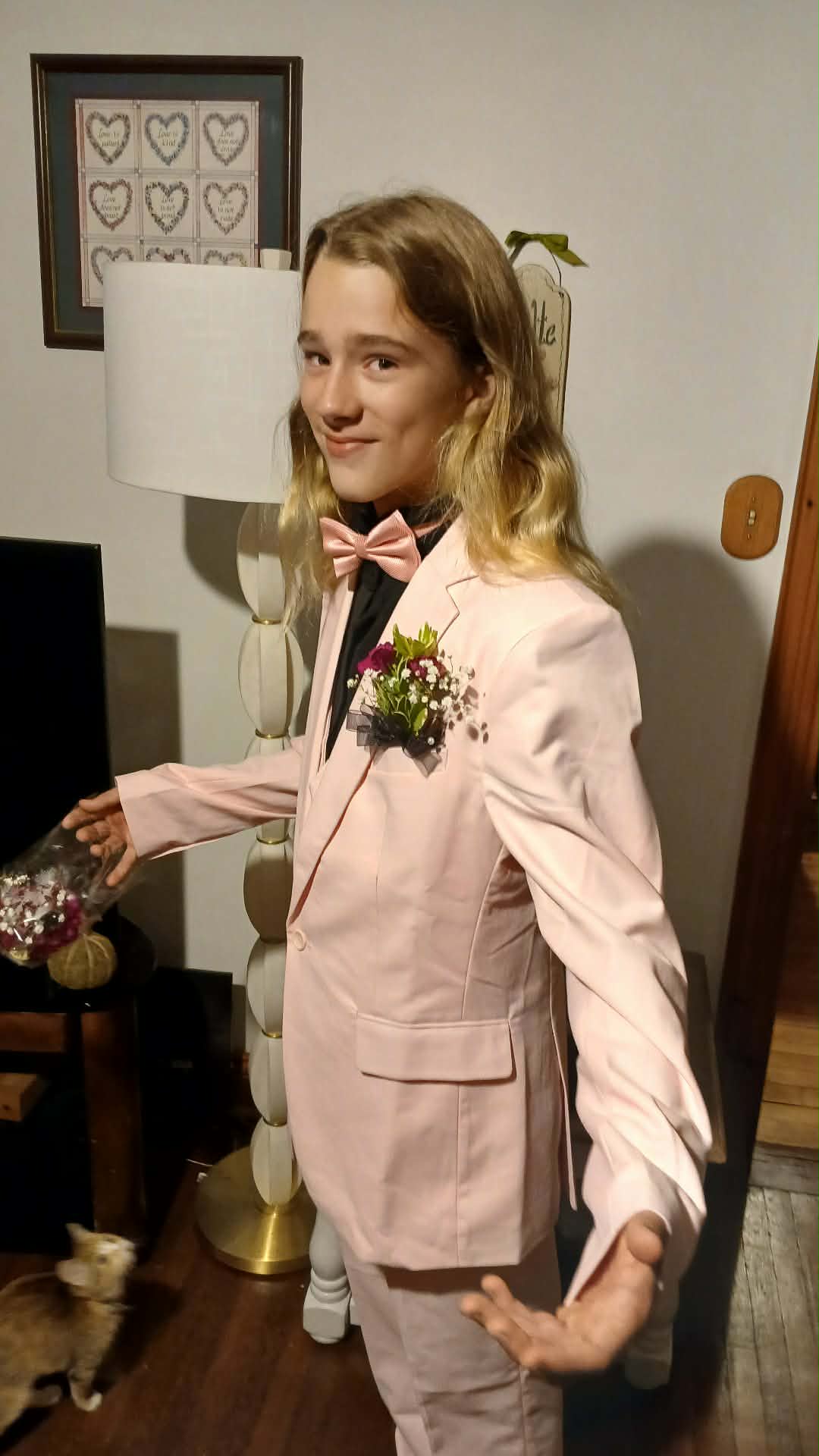
By Jessica Kenley
PORT ALLEGANY, Pa. — For Brandon Welch, 33, grief has taken the shape of something tangible: a plan to build a skate park in memory of his son, Wesley—a place he hopes will carry forward the spirit of a boy he describes as “chaos and joy and acceptance.”
Welch and his ex-wife, Sarah Langworthy, have two other children, Oliver and Natalie. Wesley also has an older sister named Braelie and two younger siblings, Alivia and Daxx, who he loved “equally and deeply,” according to his father, as he noted that Wesley had “always felt blessed to have them.”
“Wesley was hard to place a blanket statement on, because he was so unique,” his father said. “But if I had to say it simply—he was a friend.”

Wesley, remembered as artistic, funny, and fiercely individual, left a lasting impression on those who knew him. He loved skateboarding and music above all else, often spending hours playing guitar at home.
“If he was here, his guitar would be going,” his father said. “That’s how you knew he was home.”
Wesley wasn’t drawn to traditional paths, his father said. “But what’s interesting about Wesley is that although his individuality was important to him…his nature was very, very accepting. If you were wearing a chicken suit with a cigarette in your mouth, he’d ask how your day was, and love on you, and like, lift you up. Or—if you were prim and proper and, you know, dress clothes and coming out of work, he didn’t care. He offered acceptance to everyone.”
“You couldn’t get him on a team,” his father continued. “He’d get bored with the mundane—he wanted the path less traveled.”
Welch went on to reveal that Wesley had a funny quirk–he would immediately, when befriending people, try to figure out what “made that person tick,” according to his father, or to make them say, “Will you shut up?”
This is because Wesley thought it was hilarious to figure out a way to be a thorn in a person’s side, all the while being their loving, supportive friend. Welch laughed when he recalled Wesley’s term for it— ”rage-baiting.”

“He was a character, for sure,” said his father, “I was really confronted with that by this town when he left because–God, yeah–people came out of the woodwork with stories and experiences, and run-ins that they had with Wesley…he made people feel good when he was around.”
Welch gave himself a small salute when he said, “I’m like, ‘Yeah, I did a good job, he was a good dude around town.’”
Wesley found his identity in creative expression and unconventional spaces. Skateboarding, in particular, became more than a hobby—it was a reflection of who he was.
Wesley’s humor was another defining trait.
“He was maybe the funniest guy I knew,” Welch recalled, smiling. “Quick, sharp—he’d make jokes adults would laugh at that other kids didn’t even catch.”

Wesley had told his father that he had dreamed of a future that balanced responsibility and freedom—perhaps working in a high-paying job while playing guitar in bars in Nashville, Tennessee.
“He wanted to make enough money to do what he loved,” his father said. “Just go from bar to bar playing music.”
Welch recollected that a musician friend that had been an inspiration and role model to Wesley had said, “We need to achieve immortality for Wesley–his story doesn’t end here.”
At one point, Wesley even considered stand-up comedy.
“There was a spark in his eye,” his father remembered, after a visit to the National Comedy Center in Jamestown, New York. “He never got off the jokes after that,” he said.
A Private Struggle
But Welch then worried that although Wesley was all about lifting others up and making new friends, his inner struggle didn’t show much to outsiders looking in.
“[Wesley’s suicide] was totally from Mars for everybody–they’d just see this happy, silly, loving kid, but…he’s struggled since the fourth grade with mental health.”
Welch went on to say that he and his family had tried conventional treatments for mental illness–therapy and medications–for years. “It was a long-fought battle that many people didn’t see coming,” he said.
While many in the community knew Wesley as outgoing and kind, his father said there was a deeper struggle few people saw.
“I’m a very hands-on parent,” he said. “We talked every night. We did everything we could think of.”

In the wake of Wesley’s death, his father has been careful to clarify misconceptions—particularly around bullying.
“Wesley was not bullied to death,” he said. “He struggled with real mental illness, which unfortunately gets swept under the rug because we can find something more tangible to blame.”
While he acknowledges that bullying can exist and should be addressed, he cautions against using his son’s story to assign blame without full context.
“I’d say almost all kids [like Wesley] will experience some bullying at some point, just because of how unique they are. It may come from jealousy, it may come from…[a kid] not fitting in…it’s like, whatever it is, it’s natural, and it does happen, and it’s unfortunate. It shouldn’t, but it does, and it will…I’d just hate to see my son used as ammunition for anything negative,” he concluded.
Building Something That Lasts
Out of Wesley’s loss came an idea–an idea that came from, “wherever Wesley is,” according to Welch.
“I woke up and I just got smacked with, “‘You’re building a skate park,’” he said.
The project has since gained traction, with support from local businesses, community leaders, and organizations. Even the borough’s mayor has stepped in to help.
“Our mayor [Laura Moses] started taking grant writing classes so she could help get this done,” he said.
The local businesses in town also stepped up, “Every business in town carried our petition after hearing the story…I didn’t stop at a single store that didn’t take it,” Welch said.
Tony Edgell, the president of the Port Allegany Recreation Authority, is also working to identify land for the park, with a potential site already under consideration.
The McKean County Community Foundation might also be in a position to help, Welch found out–“We’ve got entities much bigger than us hoping to help–it’s all very promising,” he explained.
More Than Concrete
For Wesley’s father, the skate park is more than a memorial—it’s a solution.
“That thing Wesley gave people—acceptance, friendship—that’s what you find at a skate park,” he said.
He describes it as a place where differences disappear.
Wesley embodied that same spirit.
“He was like a human skate park,” his father said. “Chaos and joy and acceptance.”
The goal is to create a space for kids who don’t fit into traditional activities—a place for “the wanderers,” as he calls them.
“They don’t have to wander aimlessly around town,” he said. “They’ll have somewhere to go, somewhere to belong.”
Welch believes the impact will extend far beyond his own lifetime.
“Fifty years down the road, when I’m gone, it’ll still be here,” he said.
Welch also talked about the sense of resilience, accomplishment, victory and camaraderie that a skate park can create for kids.
He said, “Gosh, you can just hop off a set of stairs and roll away on your wheels, and it’s like you just won the whole season,” he said, making a reference to football.
“Because you hit the concrete over and over and over, and these kids just get back up. And you just saw him blast his body across the ground. He gets up and does it again and again until he rolls away. And that level of accomplishment is…very rare…” he trailed off, looking out the window nostalgically.
Then he continued, “It’s really an invaluable gift, and it gives forever, that sense of achievement…that rush…just–success. Nothing feels as good as just something that simple.”
In a town where many kids are still searching for where they fit, Welch hopes the skate park becomes more than concrete and rails—something alive with the same energy his son carried.
“A place where you can show up exactly as you are,” he said.
Because in the end, that’s what Wesley gave people–a place to belong.
And if all goes as planned, long after the music has faded and the stories have softened with time, there will still be a place where a kid lands their first trick, looks around for someone to share it with—and finds a friend.
Just like Wesley would have.
To go to Wesley’s Skate Park Advocates’ Facebook Page, click: https://www.facebook.com/groups/2247840335705457
To donate, click:

***************************************************************

Some suicide statistics:
- Males account for nearly 80% of all suicide deaths.
- Individuals in rural areas experience significantly higher suicide rates than those in urban areas.
- Non-Hispanic American Indian/Alaska Native and non-Hispanic White populations have the highest rates of suicide
- Over 49,000 people died by suicide in 2023, which is approximately one suicide death every 11 minutes.
If you or anyone you know is struggling with suicidal thoughts, there is help available:
- Call 988, the Suicide and Crisis Lifeline
- Or go to: https://988lifeline.org/